Byzantium in Rome: Santa Maria Antiqua
Within the Roman Forum, for just a few extra euros you can also visit the extraordinary church of Santa Maria Antiqua—ask us to add it to your tour with us.
4/7/20262 min read
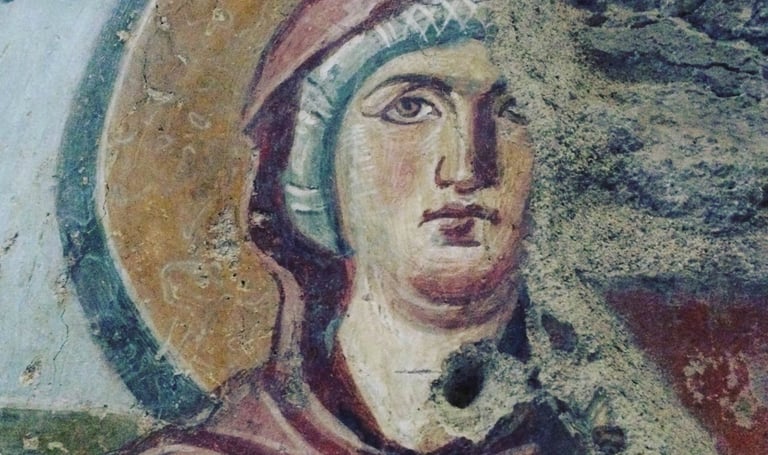
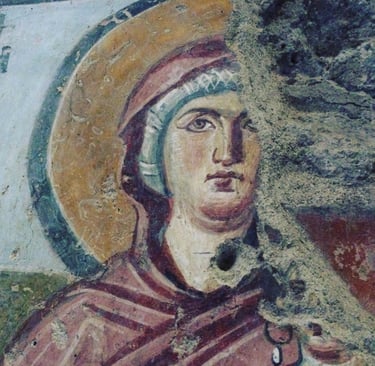
Santa Maria Antiqua, located in the Roman Forum right at the foot of the Palatine Hill, was the church of the imperial palace during the Byzantine rule of Rome. It is the Byzantine church par excellence—almost like a fragment of Constantinople outside Constantinople.
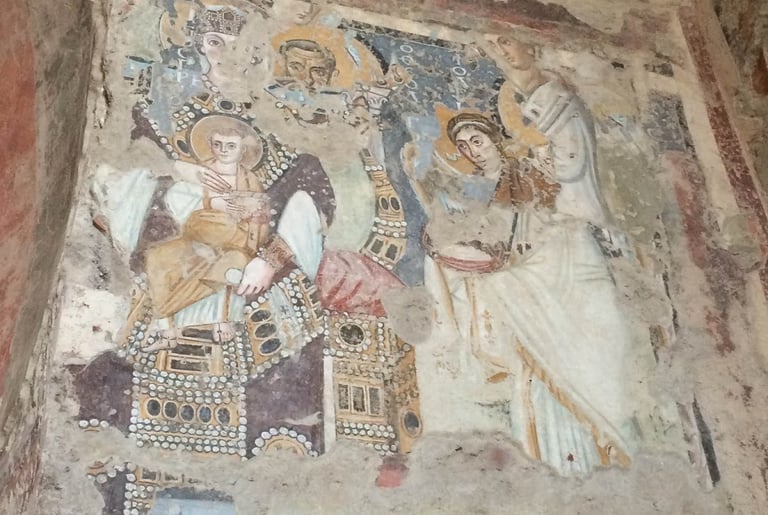
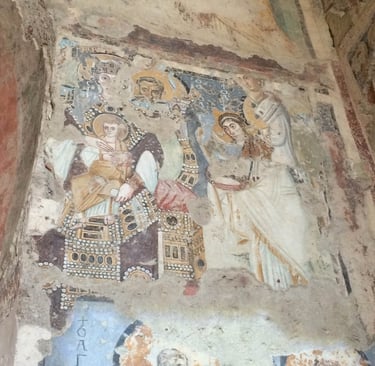
Its decorations and painted layers tell the story of the encounter between Western and Eastern art and devotion between the 6th and 8th centuries. Italian, Greek, and Eastern craftsmen contributed to a rich mix of styles—Hellenizing, iconic, and monumental—creating an unparalleled variety of early medieval imperial art, unmatched even in the “New Rome.”
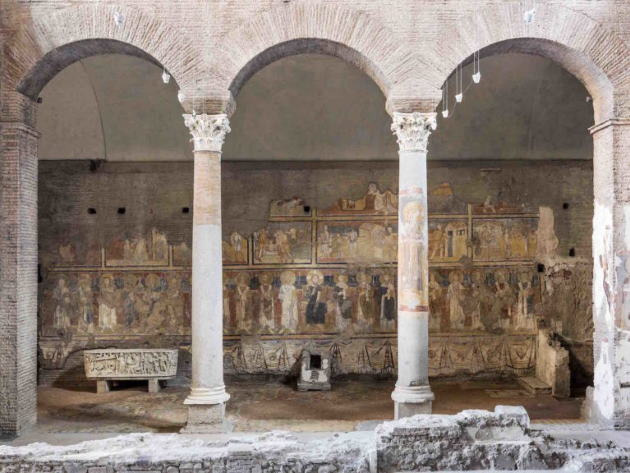
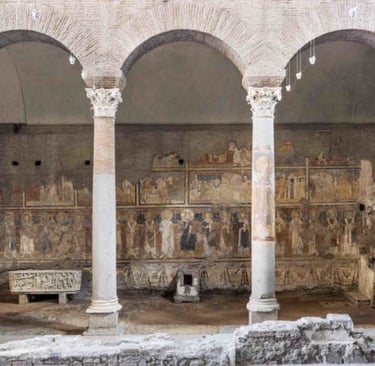
The absolute highlight of the church, a true “living fossil” of Byzantine painting, is the famous palimpsest wall. It consists of four distinct painted layers (early 6th century, late 6th century, post-649, and 705–707), offering, in a single extraordinary view, the evolution of Christian art during one of its most fascinating and mysterious periods.
Much like Pompeii, it was a natural catastrophe that preserved the church: the earthquake of 847, which partially destroyed the building and led to its abandonment, thereby concealing and safeguarding the precious painted plasters for centuries.
A second catastrophe—this time man-made—makes this site a true unicum of Byzantine painting. This was Iconoclasm, a political-religious movement that, in the 8th century, led to the destruction of many sacred images in the Eastern Empire. The Popes strongly opposed it, allowing Byzantine artistic production in Rome to survive. Santa Maria Antiqua preserves some of its most important examples, to the point that it can be considered the “Rosetta Stone” of pre-Iconoclastic Eastern art.
Not bad at all…
© 2025. All rights reserved.
Contacts
Or WhatsApp me: